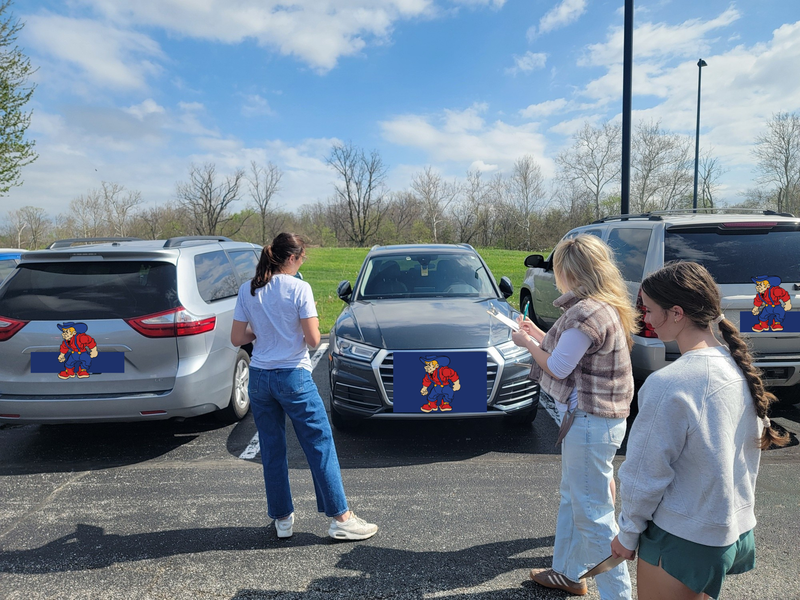

In Mr. Johnson’s AP Biology class, students are hitting the pavement to turn the teacher parking lot into a living laboratory for ecological study. By observing the various makes and models of vehicles driven by PHS staff, the class is applying Simpson’s Diversity Index, a mathematical tool used by ecologists to quantify the biodiversity of a specific habitat. This exercise moves beyond simple counting; it teaches students how to account for both species richness (the number of different types) and relative abundance (how many of each type exist) to calculate a single score of biological health.
The lab serves as a tangible reminder that diversity is a primary indicator of ecosystem stability. Just as a forest with a wide variety of species is more resilient to disease or environmental changes than a monoculture, a "diverse" parking lot represents a robust system. Through this hands-on model, students learn that a higher diversity index often correlates with a more stable and complex ecosystem, providing them with a practical foundation for interpreting ecological data before they transition to studying more traditional biological communities.