
The buzzing of bees and the flutter of butterfly wings are about to get a lot louder at The Imagination Lab.
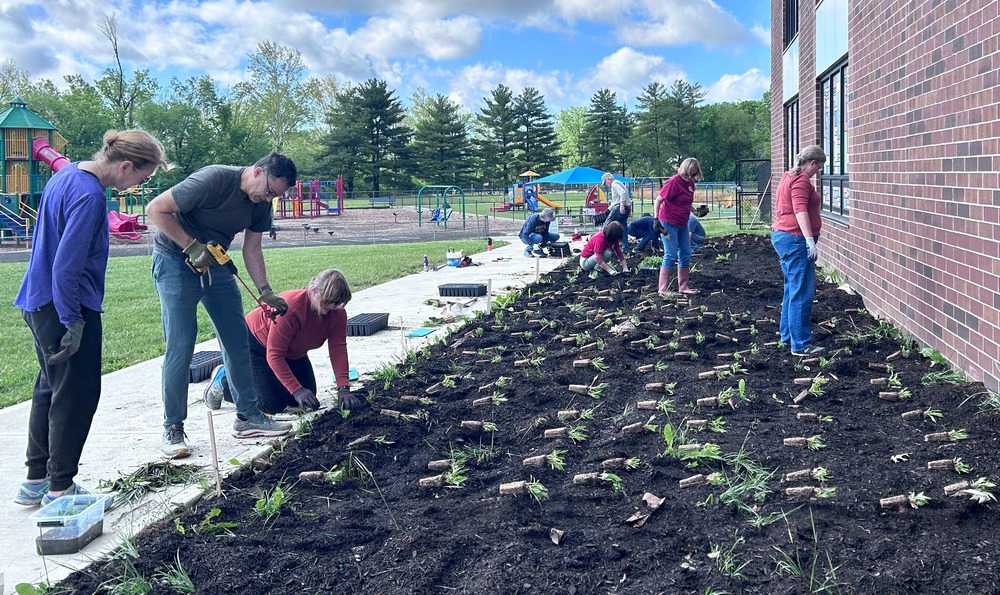
This past Saturday, a dedicated crew from the Hendricks County Master Gardeners gathered to install 300 native plant plugs along the facility’s exterior. This massive planting effort marks the latest phase in an ongoing mission to transform the surrounding landscape into a thriving sanctuary for local wildlife, with a specific focus on the iconic Monarch butterfly.
Student-Grown Success: The Cultivating Crew
While the Master Gardeners provided the expert muscle on Saturday, the heart of the project started months ago with the Cultivating Crew. This group of industrious 4th-grade students spends one recess a week dedicated to all things gardening.
The students grew approximately 35 plants from seed and carefully overwintered them to ensure they were hardy enough for the spring soil. Most notably, this student-led effort provided the milkweed for the site—the essential host plant that Monarch butterflies require to lay their eggs and feed their larvae.
The Anatomy of a Pollinator Haven
The 300 plugs funded by a generous donation from the Duke Energy Foundation were selected to provide a continuous bloom cycle from spring through autumn. The planting included 50 units of each of the following native species:
Common Name | Scientific Name | Benefit to the Ecosystem |
Lavender Hyssop | Agastache foeniculum | Highly attractive to honeybees and bumblebees. |
Meadow Blazing Star | Liatris ligulistylis | Often called the "Monarch Magnet" for its nectar. |
Wild Bergamot | Monarda fistulosa | Supports specialized bees and hummingbirds. |
Black-eyed Susan | Rudbeckia hirta | Provides hardy, long-lasting summer color and seeds for birds. |
Smooth Blue Aster | Symphyotrichum laeve | A vital late-season food source for migrating butterflies. |
Blue Vervain | Verbena hastata | Thrives in various conditions and hosts several moth species. |
A Multigenerational Effort
The work on Saturday wasn't just about new growth; it was also about maintaining the progress already made. The Master Gardeners spent time weeding the beds established last year, which are already flourishing with purple coneflowers and milkweed.
The project also highlights a beautiful cycle of student collaboration:
The Harvest: Last September, 2nd-grade students carefully harvested seeds from the lab's zinnia plants.
The Planting: Two weeks ago, Master Gardeners returned to work with 1st-grade students to plant those very same seeds, ensuring a bright burst of color for the coming season.
Community-Powered Growth
The Duke Energy Foundation continues its strong track record of supporting environmental education. Their contribution bridges the gap between classroom theory and real-world application, allowing students to see the tangible results of their labor.
"Support from the Duke Energy Foundation and the expertise of the Master Gardeners allows us to turn a simple patch of grass into a living laboratory," said organizers at The Imagination Lab. "It’s about more than just aesthetics; it’s about showing students the direct impact they can have on the natural world."
As these 300+ plants take root, they serve as a growing testament to what can be achieved when local experts, corporate partners, and student "Cultivating Crews" work together to green the future of Hendricks County.