
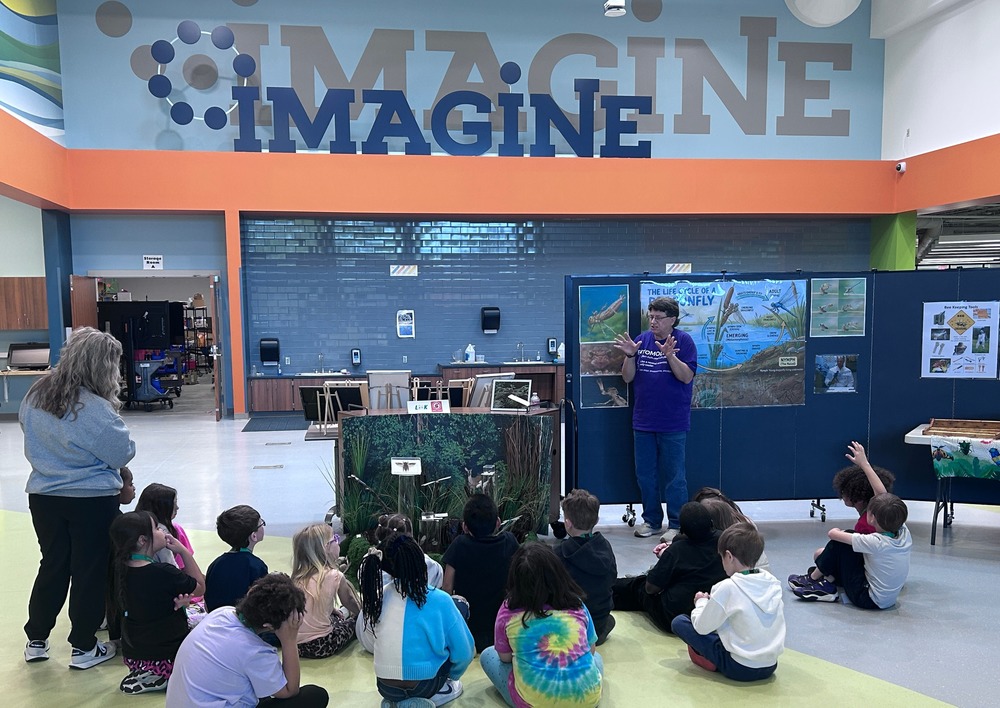
Last week, The Imagination Lab buzzed with a different kind of energy—one involving six legs, iridescent wings, and the return of a hometown expert. Dr. Sarah Donelson, a Plainfield graduate and former Professor of Entomology at Oklahoma State University, stepped into the role of Scientist-in-Residence to lead 2nd and 4th-graders through an immersive exploration of the insect world.
Currently serving as an Instructional Assistant at Central Elementary, Dr. Donelson (affectionately known as "Dr. D") bridged the gap between high-level academia and elementary wonder, bringing handmade exhibits to life for local students.
The Scientist as an Artist
What made this residency truly unique was Dr. Donelson’s background as a certified scientific illustrator. Students didn't just look at mass-produced posters; they were surrounded by museum-quality exhibits featuring ants, dragonflies, and dung beetles designed specifically for The Imagination Lab.
The displays featured:
Original Artwork: Students marveled at Dr. D’s intricate drawings and paintings, which captured the minute textures of the insect world with surgical precision.
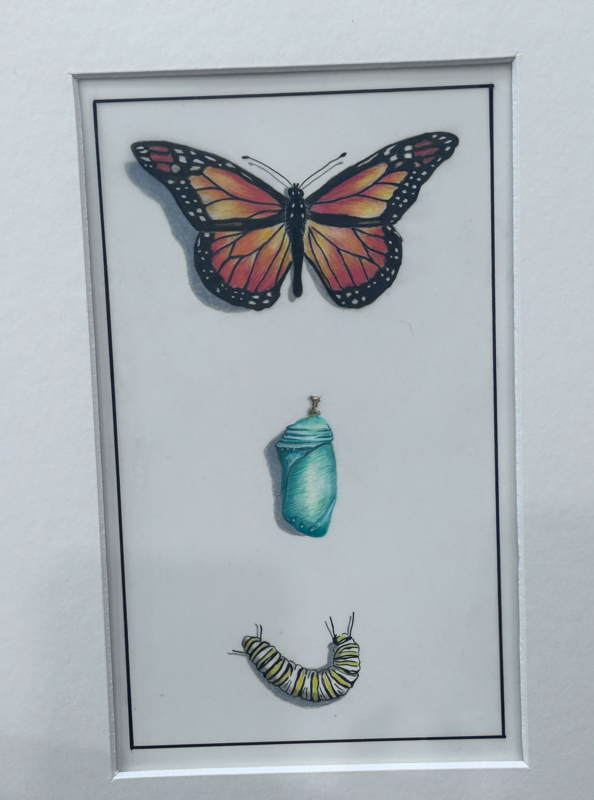
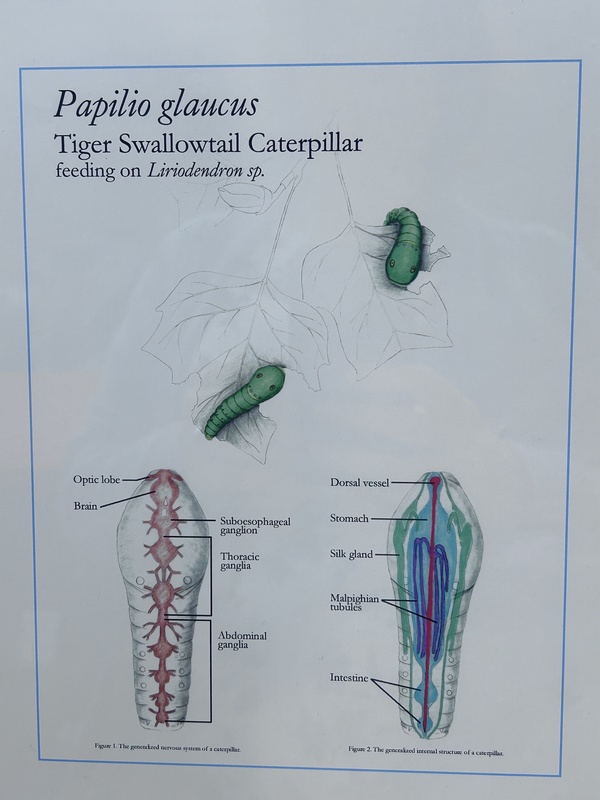
Handmade Models: The exhibits included detailed models of insects that Dr. Donelson crafted herself to serve as tactile teaching tools.
By seeing her work, students learned that science and art aren't separate subjects—they are two ways of observing and describing the same world.
Focused Observation: The Nature Journal
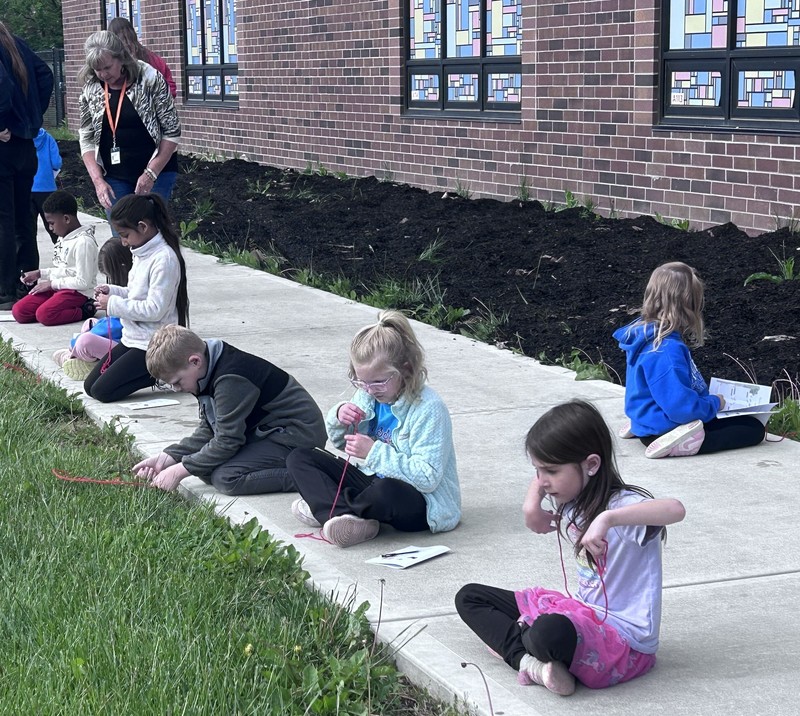
To ground their scientific inquiry, Dr. Donelson introduced students to nature journaling. Through an instructional video, she explained the "why" and "how" of documenting the natural world. To get them started, each student received a kit designed to eliminate "blank page syndrome":
A dedicated journal and pencil.
A loop of string: A simple yet brilliant tool used to "frame" a small patch of ground. By narrowing their field of vision, students learned to focus on the tiny, moving dramas of the ecosystem that usually go unnoticed.
2nd Grade: Inventing an insect
For the 2nd-grade classes, the focus was on anatomy and adaptation. Before they could dive into the "weird and wild" of entomology, they had to master the basics: What actually makes an insect an insect?
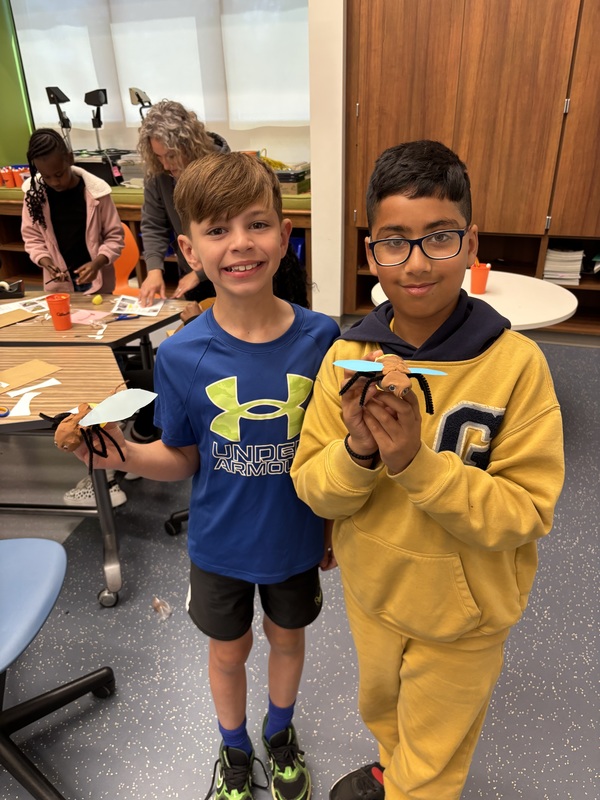
After learning about the three body segments (head, thorax, and abdomen) and the necessity of six legs, students were challenged to become "insect architects." They invented their own unique insect, before bringing their creations to life with a 3D model and an imaginative name.
4th Grade: Inside-Out Engineering
The 4th-grade curriculum took a deep dive into both biology and physics. In a fascinating look at internal systems, students observed a dissected insect, allowing them to compare and contrast its body parts with human anatomy.
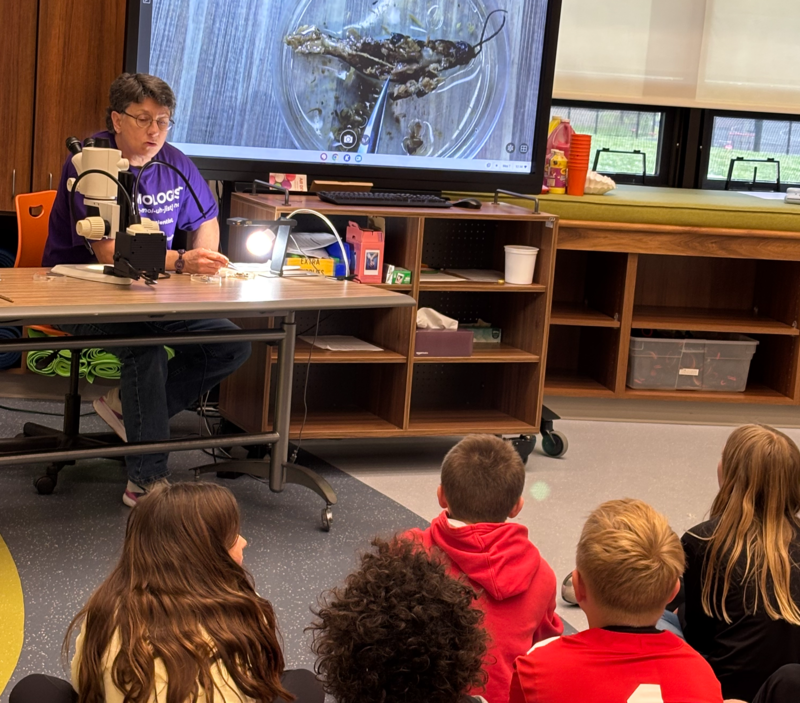 This hands-on comparison helped students understand how different life forms solve the same problems—like breathing, circulating nutrients, and moving—using vastly different "equipment."
Following the anatomy lesson, the focus shifted to bioluminescent engineering:
The Challenge: Students leveraged their understanding of physical science to create a working circuit.
The Goal: Using an LED to mimic the firefly’s signature glow, students modeled their own fireflies around the light source, successfully blending biology with electrical engineering.
Local Roots, Global Expertise
The residency highlights a unique advantage for Plainfield students. Having a scientist with Dr. Donelson’s pedigree—transitioning from a university professorship to a hands-on role within the district—provides students with a rare "real-world" connection to their studies.